
Introduction
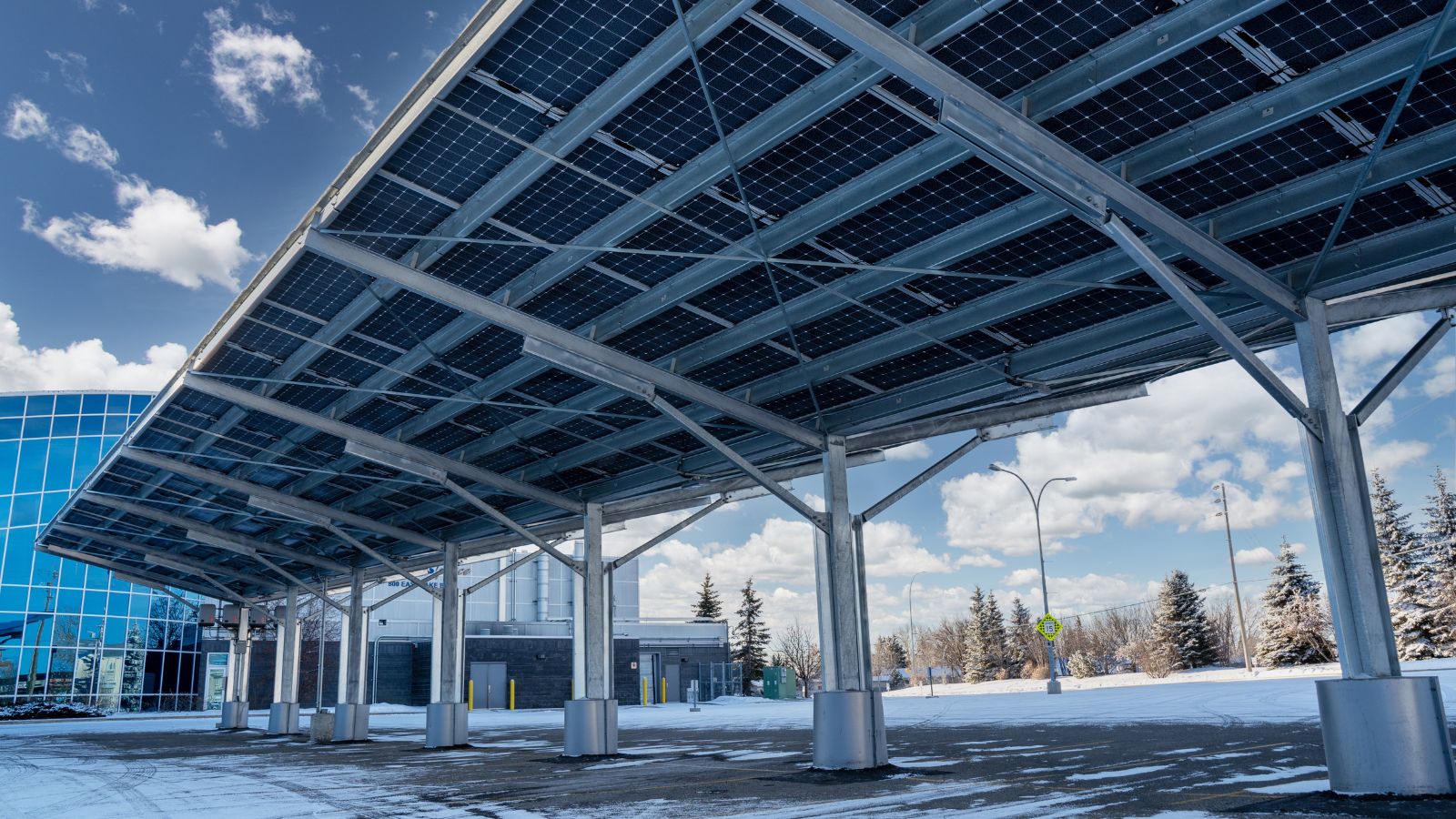
A solar carport mounting system is a practical dual-function photovoltaic structure that provides shade for parked vehicles while generating clean solar power. Unlike traditional rooftop and ground solar brackets, this solution makes full use of idle parking areas without occupying extra land. It cools vehicles effectively and delivers steady power output at the same time.
In 2026, solar carports have become a popular choice for commercial parking lots, enterprise parks, residential communities and electric vehicle charging stations across the globe. However, many project developers and installers still face challenges in proper structural design, accurate cost planning and standard installation.
This guide covers all key points about solar carport mounting systems: latest cost analysis, professional design specifications, detailed installation procedures, material selection rules and typical pitfalls. It helps you deliver durable, cost-efficient solar carport projects.
1. Solar Carport Mounting System Cost Breakdown (2026 Latest Data)
A solar carport mounting system costs more than ordinary solar brackets, due to customized steel or aluminum frames, reinforced foundations and wind-resistant structure. The final price varies by project scale, material grade, local wind and snow load standards, as well as installation difficulty.
1.1 Overall Market Price Range
• Residential solar carport (5kW–20kW): $3.2–$4.5 per watt
• Commercial solar carport (50kW–5MW): $2.8–$3.8 per watt. Large-scale projects enjoy lower unit cost thanks to economies of scale.
1.2 Detailed Cost Composition
1. Mounting structure material cost (60%–70%)
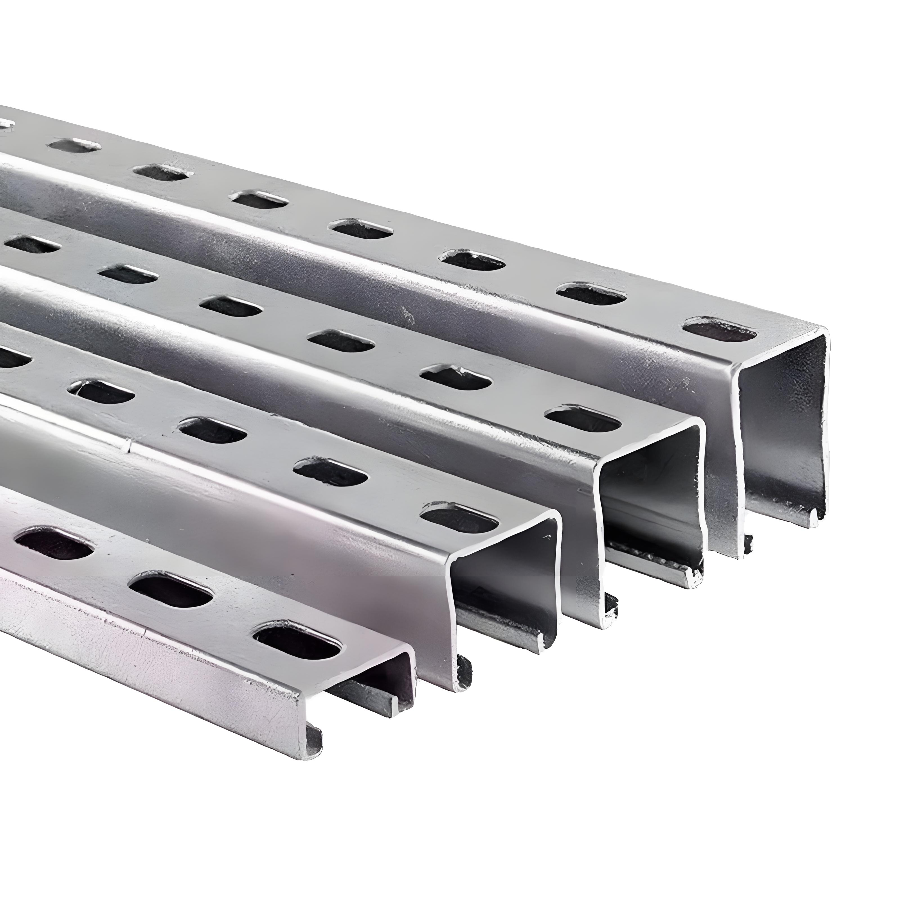
The largest expense comes from hot-dip galvanized steel or aluminum alloy frames, columns, beams and matching accessories including clamps, rails and bolts. Hot-dip galvanized steel carports are cost-effective and ideal for windy coastal regions. Aluminum alloy options feature light weight and superior anti-corrosion performance, well suited for high-end commercial projects.
2. Foundation engineering cost (15%–20%)
It includes concrete footings, anchor bolts and spiral ground pile construction. Sites with soft soil or strong wind require reinforced foundations, which will raise the total project budget.
3. Installation & labor cost (10%–15%)
Professional teams are required for frame assembly, module installation and system grounding. Labor cost per unit is much lower for large commercial solar carport projects.
4. Auxiliary & certification cost (5%–10%)
This part covers weatherproof parts, anti-rust treatment, site inspection and certification fees to meet local building codes.
1.3 Key Factors Affecting Solar Carport Costs
• Local wind load and snow load parameters
• Single-span or double-span layout (wide double-row carports cut foundation cost by around 50%)
• Material grade: S235JR/S355JR structural steel, 6063-T5 aluminum
• Customized height, span and waterproof requirements
2. Professional Solar Carport Mounting System Design Guide
Scientific design guarantees safe operation and long service life for any solar carport mounting system. Non-standard design may lead to water accumulation, structural deformation or wind damage, and reduce power generation efficiency. All designs must comply with local photovoltaic structure safety regulations.
2.1 Basic Design Parameters & Standards
1. Vehicle clearance height: Standard height 2.5m–2.8m for sedans and SUVs; 3.0m and above for vans and engineering vehicles
2. Structural span: Single row 5–8m; double row with middle support 16–20m for two parking bays
3. Drainage slope: 2%–5% gradient to prevent rainwater buildup and extra structural load
4. Wind & snow resistance: Customized design based on local climate, adapting to typhoon zones, snowy areas and windy desert regions. Follow official PV structural design standards for safety.
2.2 Main Solar Carport Structural Types
2.1 Single-Row Single-Span Carport
It fits small residential parking areas, featuring simple structure, flexible layout, easy installation and competitive price. It is the most widely used solution for household solar carports.
2.2 Double-Row Wide-Span Carport
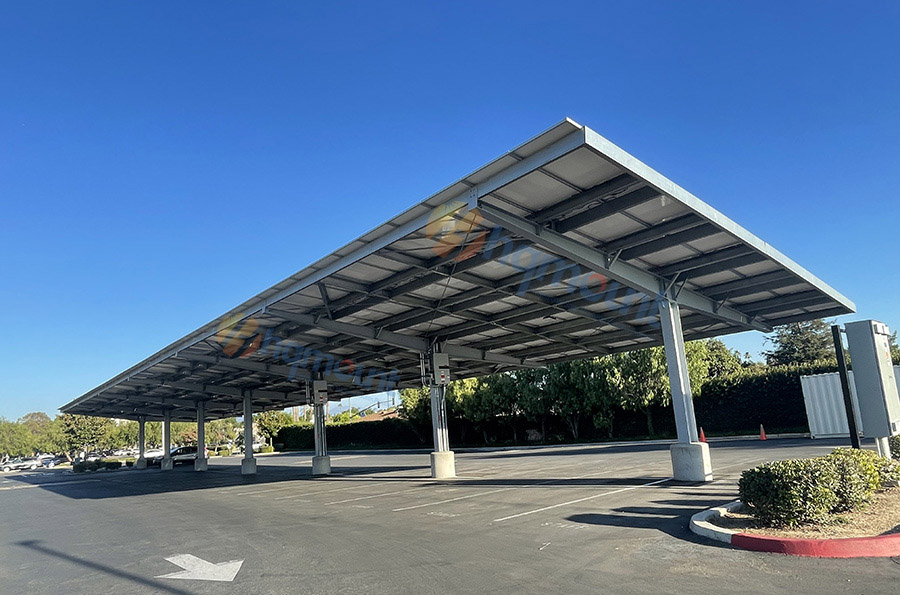
With middle column support, it covers two rows of parking spaces. Fewer columns and foundations mean higher space utilization, making it the top pick for commercial parking lots and factory zones.
2.3 Waterproof Integrated Solar Carport
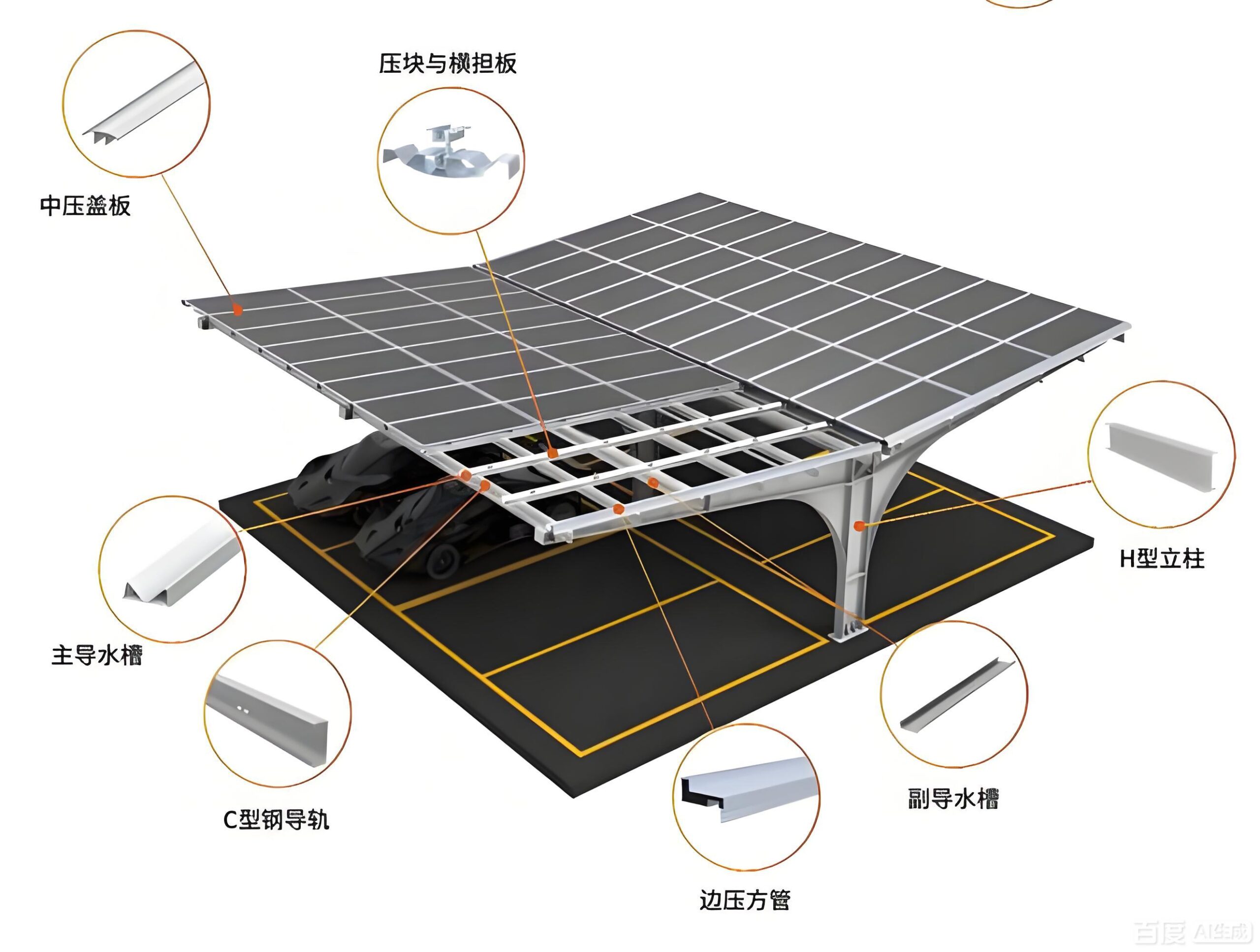
Equipped with dedicated waterproof trays and sealing parts, it provides full rain protection. It is widely applied in office buildings and high-standard parking areas.
2.3 Material Selection Principles
• Hot-dip galvanized steel bracket: High mechanical strength, excellent wind resistance and affordable price, with a service life up to 30 years for most commercial projects
• Aluminum alloy bracket: Lightweight, rust-free and aesthetically pleasing, easy for transportation, perfect for residential communities and premium commercial sites
• Fasteners & accessories: Use stainless steel or hot-dip galvanized parts to avoid rust and loosening, ensuring long-term structural stability
3. Step-by-Step Solar Carport Mounting System Installation Guide
Standard installation directly affects safety, power output and service life of the solar carport mounting system. The whole process includes 7 core steps, applicable to both residential and commercial projects.
Step 1: On-Site Survey & Scheme Confirmation
Measure parking area size, ground flatness and soil condition, and check local sunlight angle. Confirm installation position, structural span and foundation type, and avoid damage to underground pipelines.
Step 2: Foundation Construction
Choose concrete independent foundation or spiral ground pile foundation according to site conditions. Level and fix base supports to ensure vertical and horizontal accuracy of mounting columns.
Step 3: Main Frame Assembly
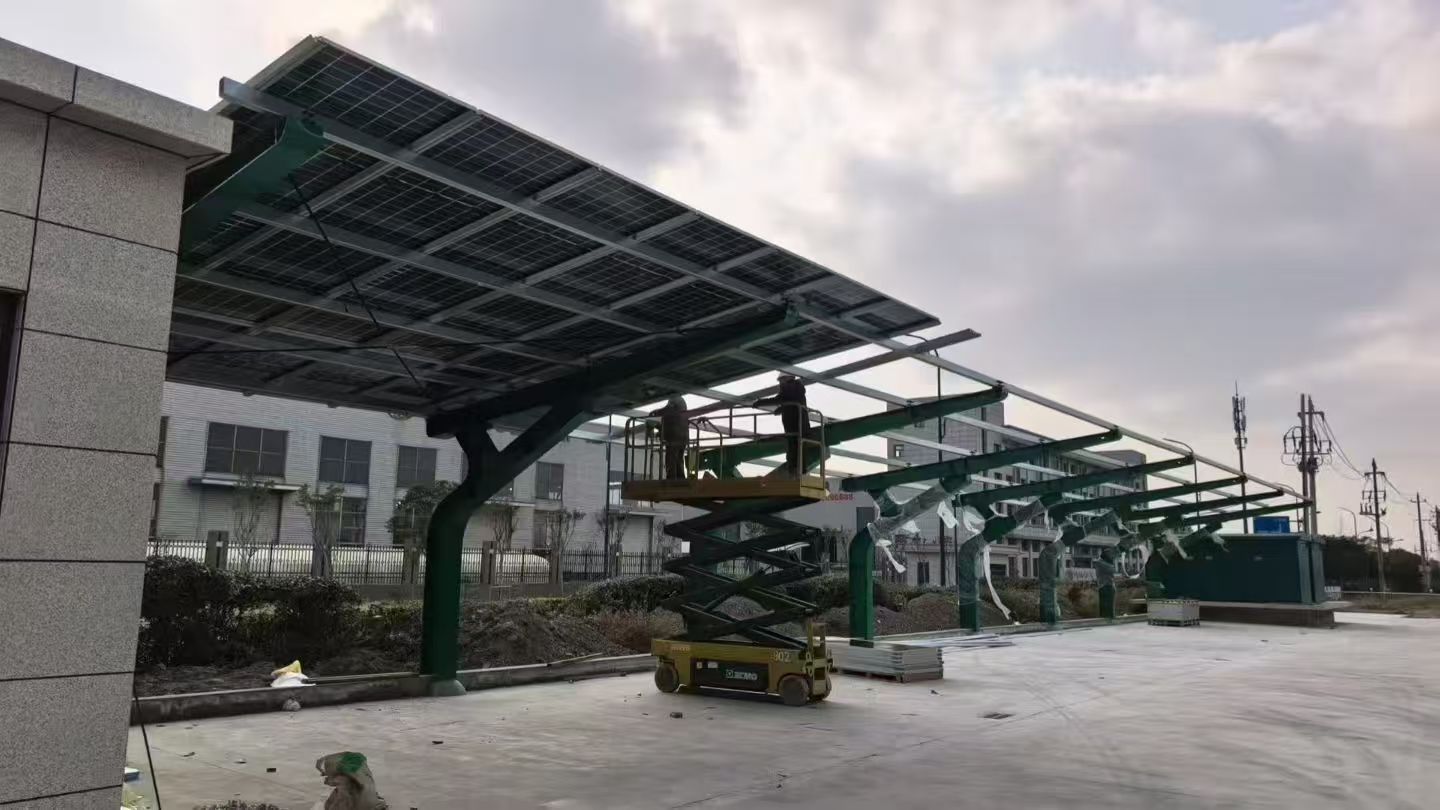
Install vertical columns, main beams and cross beams in sequence. Tighten all bolts firmly to keep the entire carport frame stable.
Step 4: PV Mounting Rail & Clamp Installation
Lay mounting rails following module layout, and fix with special PV clamps. Reserve proper gaps to cope with thermal expansion and contraction.
Step 5: Solar Panel Mounting
Arrange solar panels in line with designed tilt angle. Ensure even stress on each module and avoid shadow coverage that lowers power generation.
Step 6: Waterproof & Auxiliary Installation
For waterproof carports, install waterproof accessories, sealing strips and drainage pipes. Complete system grounding and lightning protection to meet electrical safety standards.
Step 7: System Testing & Acceptance
Inspect structural firmness, panel flatness, drainage performance and circuit safety. Run power generation tests and complete project acceptance before official operation.
4. Core Advantages of Standard Solar Carport Mounting Systems
1. Space Saving & Dual-Purpose Function
Make full use of existing parking resources with no extra land cost. The structure works as both sunshade and power generation equipment.
2. Strong Environmental Adaptability
Custom windproof and snowproof designs fit tropical, temperate and desert climates, enabling stable long-term outdoor operation.
3. Excellent Economic Return
Solar carports cut electricity bills for families and enterprises. Commercial systems can also connect to the grid for power sales, with an investment payback period of 5–8 years.
4. Low Maintenance Demand
High-quality galvanized steel and aluminum structures resist corrosion and rust. Daily maintenance is almost unnecessary, with a lifespan of 25–30 years, according to solar industry lifespan data.
5. EV Charging Compatibility
Reserve space for electric vehicle charging piles to realize integration of green power and new energy transportation.
5. Common Solar Carport Design & Installation Mistakes to Avoid
1. Insufficient drainage slope causes rainwater pooling and increases structural load
2. Improper foundation design leads to frame tilting in windy and rainy weather
3. Overly dense panel arrangement results in mutual shading and reduced power output
4. Low-grade non-galvanized accessories get rusty and loose within 2 to 3 years
5. Ignoring local wind and snow load standards brings potential safety risks
6. How to Choose a Reliable Solar Carport Mounting Manufacturer
High-quality solar carport mounting system is the foundation for stable long-term operation. When selecting suppliers, focus on these key points:
• Mature structural design capability, supporting customized solutions for different wind and snow loads
• Standard raw materials including S235JR/S355JR steel and 6063-T5 aluminum
• Factory prefabrication to shorten on-site installation time
• Rich project cases of residential and commercial solar carports
• Professional technical guidance and after-sales support for installation
Conclusion
Solar carport mounting system remains one of the most cost-effective and versatile PV solutions in 2026. Scientific design, reasonable budget planning and standard installation are vital to ensure project safety and high power generation.
Whether for small residential setups or large-span commercial parking lot projects, our Solar Mounting System Solution and qualified solar carport brackets maximize space utilization and create long-term green economic benefits. Choosing professional customized mounting solutions will help your photovoltaic projects run steadily and gain ideal returns